Scandit Enters Loss Prevention Market: Self-Checkout Solution Reduces Loss While Keeping Shopping Frictionless
Vision AI-based solution enables retailers to recover or deter more than 75% of self-checkout losses via real-time detection, with privacy by design
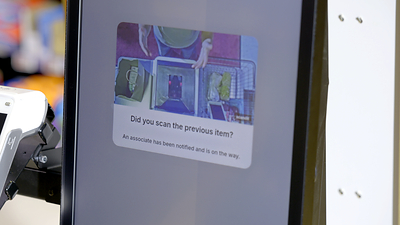
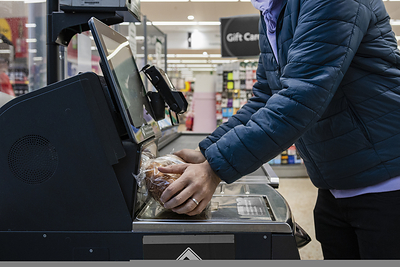
ZÜRICH, Sept. 15, 2026 /PRNewswire/ -- Scandit, the leader in smart data capture, today announced Self-Checkout Loss Prevention, a real-time vision AI solution that helps retailers detect loss patterns whether accidental or intentional as they happen. The solution empowers shoppers to self-correct, without store associate intervention in the majority of cases, to keep the checkout flow uninterrupted.
Scandit's entry into the loss prevention market addresses one of retail's most visible tensions: reducing loss at self checkout without adding friction that frustrates shoppers or burdens store teams. Self-checkout now handles 54% of transactions in stores that have it. Those stores carry losses 33% higher than comparable stores without it, and loss rises an average of 22% in the year after installation, according to ECR Retail Loss's Self-Checkout Loss Report 2026. Random spot checks can take in excess of two minutes according to one German retailer causing customer friction and absorbing associate time.
With Self-Checkout Loss Prevention, a soft on-screen nudge to shoppers, or attendant notification if escalated, corrects any flagged items before a transaction is completed, resulting in the recovery or deterrence of more than 75% of losses attributed to self checkout. This includes known loss patterns such as missed scans, intentionally skipped items, left in trolley and abandoned transactions.
"Self-checkout fundamentally changed retail, but it also changed the loss equation," said Christian Floerkemeier, Scandit CTO and Co-Founder. "Retailers shouldn't have to choose between a fast checkout experience and strong loss prevention. Self-Checkout Loss Prevention gives them a software-first way to detect issues in real time with the process configurable to a retailer's own policy. In addition to recovering losses, it also enables retailers to optimize labor usage more productively."
Self-Checkout Loss Prevention deploys as a per-station architecture which eliminates the need for dedicated servers and complex installation while unlocking a scalable deployment from small store formats to large hypermarkets. The hardware-agnostic solution works with existing camera infrastructure - whether built-in, off-the-shelf, or standard security cameras above the self-checkout station - eliminating the need for purpose-built AI hardware to maintain a low total cost of ownership. With privacy at its core, the solution processes video on the station and is designed to support retailers in meeting their GDPR obligations. Analyzing items and transaction activity only means no facial or biometric identification is required, avoiding by design the practices the EU AI Act prohibits, and is all backed by Scandit's ISO 27001 certification.
"One of the challenges of vision AI checks at self-checkout has been the heavy infrastructure cost and latency involved in some legacy solutions which often created a disconnect between the behavior and the timing of the intervention leading to confusion for all involved," commented Greg Buzek, President and Principal Analyst, IHL Group. "A lightweight solution that is easy to deploy in stores removes that cost and latency, and where existing cameras can be reused, lowers the cost further. That can be a win-win for retailers: deterring deliberate theft while quickly resolving the honest mistakes that would otherwise slow the transaction process."
With this announcement and Scandit's launch of Age Verified Self-Checkout in July 2026, the two biggest friction points which require associate involvement are significantly reduced. Age-Verified Self-Checkout enables retailers to automate and verify self-checkout purchases of age-restricted items to reduce lane delays, remove avoidable associate intervention and improve compliance. With both solutions combined, Scandit provides a more autonomous self-checkout model that supports age-verification compliance, protected on loss, and frees up associates for higher value work instead of routine checks.
These announcements build on Scandit's broader vision for store intelligence and is the latest expansion of its retail solutions portfolio also encompassing on-shelf availability via ShelfView, price and planogram compliance, expiry date management and markdown and intelligent in-store picking. Retailers can turn store data into real-time inventory visibility and prioritized actions to protect profit and reduce operational risk.
Additional materials:
- Inside Self-Checkout Loss Prevention: How Vision AI Catches Loss As It Happens
- Self-Checkout Loss Prevention Without Surveillance: How Scandit Protects Privacy
About Scandit
Scandit is the leader in smart data capture, powered by vision AI, giving superpowers to workers, customers, and businesses by providing actionable insights and automating end-to-end processes. Its Smart Data Capture platform enables smart devices, such as smartphones, handheld computers, drones, digital eyewear, robots, and fixed cameras to interact with physical items by capturing data from barcodes, text, IDs, and objects with unmatched speed, accuracy, and intelligence.
Scandit enables innovation that delivers significant cost savings, increases employee retention and customer loyalty. The company partners with customers at every step with trials, solution design, integration, and customer success support included.
Visit scandit.com to learn why market leaders across retail, transport and logistics, healthcare and manufacturing like Instacart, Carrefour, Ahold Delhaize, Albertsons, Levi Strauss & Co., Sephora, Lufthansa, and FedEx trust Scandit.

 View original content to download multimedia:https://www.prnewswire.co.uk/news-releases/scandit-enters-loss-prevention-market-self-checkout-solution-reduces-loss-while-keeping-shopping-frictionless-302877720.html